
Plank Termite & Pest Control
Pest ID: Wood-Destroying Insects
Silent Destroyers of Missouri Homes
Wood-Destroying Insect Control in Rolla and Central Missouri
Termites, carpenter ants, powder post beetles, and carpenter bees might be small—but the damage they cause can cost thousands in repairs. These pests quietly weaken structural wood, burrow into beams, and infest flooring or framing before you even know they’re there. In humid Central Missouri, untreated wood and aging buildings are especially at risk. At Plank Termite & Pest Control, we provide expert Termite Control and prevention to stop wood-destroying insects before they compromise your home or business. We proudly serve Rolla, Osage Beach, Lebanon, Waynesville, Camdenton, and surrounding Central Missouri communities with trusted mosquito and pest control services.
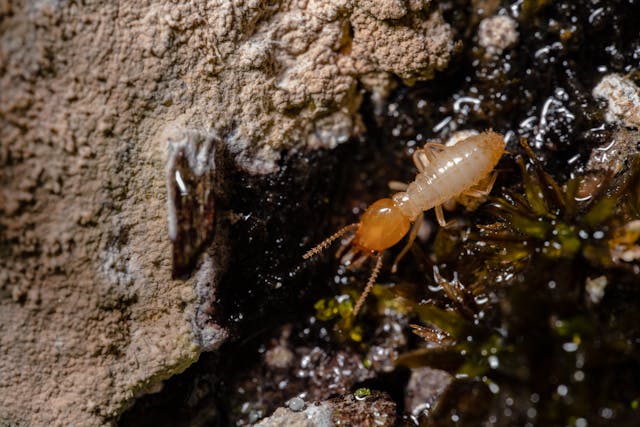
Wood-Destroying Insects Identification
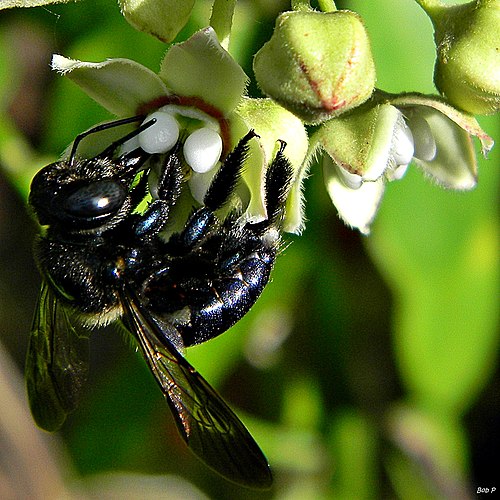
By Bob Peterson from North Palm Beach, Florida, Planet Earth! - Southern Carpenter Bee (Xylocopa micans) ♀Uploaded by Jacopo Werther, CC BY-SA 2.0, Link
Carpenter Bees
- Size: ½ to 1 inch
- Appearance: Black or metallic blue with a shiny, hairless abdomen
- Where Found: Decks, eaves, siding, fascia, untreated wood
- Evidence: Perfectly round holes drilled into wood and piles of sawdust beneath openings
- Behavior: Solitary bees that tunnel into wood to lay eggs; return annually if untreated
- Inspection Tip: Look for frass (sawdust) around fascia boards or holes on exposed wood surfaces
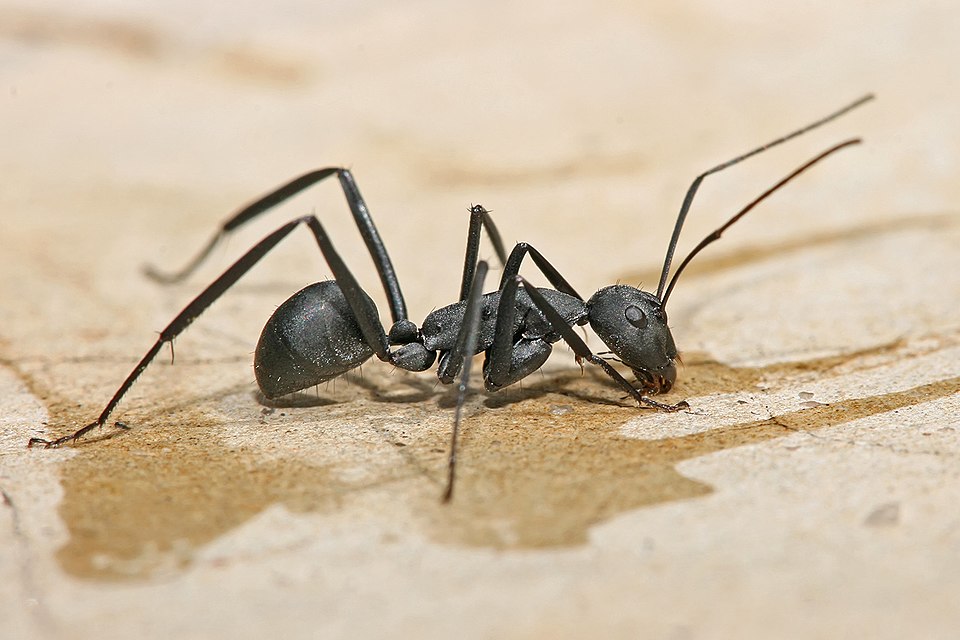
Carpenter Ants
- Size: ¼ to ½ inch
- Appearance: Black or dark brown with elbowed antennae and narrow waist
- Where Found: Inside walls, attics, hollow doors, and water-damaged wood
- Evidence: Sawdust piles, rustling sounds in walls, large black ants indoors
- Behavior: Do not eat wood but excavate it to build nests, especially near moisture
- Inspection Tip: Tap wood surfaces—hollow-sounding wood may indicate internal galleries
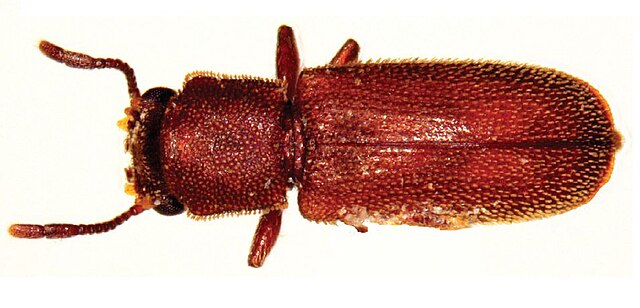
By Wisut Sittichaya, Roger A. Beaver, Lan-Yu Liu, Aran Ngampongsai - Sittichaya W et al. (2009) An illustrated key to powder post beetles (Coleoptera, Bostrichidae) associated with rubberwood in Thailand, with new records and a checklist of species found in Southern Thailand. ZooKeys 26: 33–51. doi:10.3897/zookeys.26.88, CC BY 3.0, Link
Powder Post Beetles
- Size: ⅛ to ¼ inch
- Appearance: Long, slender body, reddish-brown to black in color
- Where Found: Hardwood flooring, baseboards, furniture, and stored lumber
- Evidence: Fine, powdery dust and small round exit holes in wood
- Behavior: Larvae feed inside wood for months or years before emerging
- Inspection Tip: Shine a flashlight across wood to look for pinholes or active dust trails
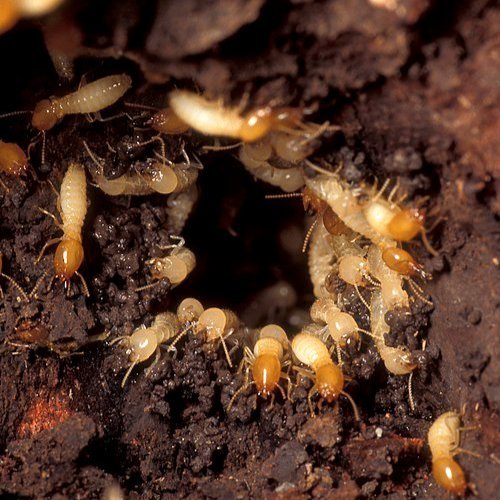
Eastern Subterranean Termites
- Size: ⅛ inch (worker); ½ inch (swarmer)
- Appearance: Creamy white workers, dark brown swarmers with wings
- Where Found: Soil, foundation walls, crawlspaces, mud tubes on exterior walls
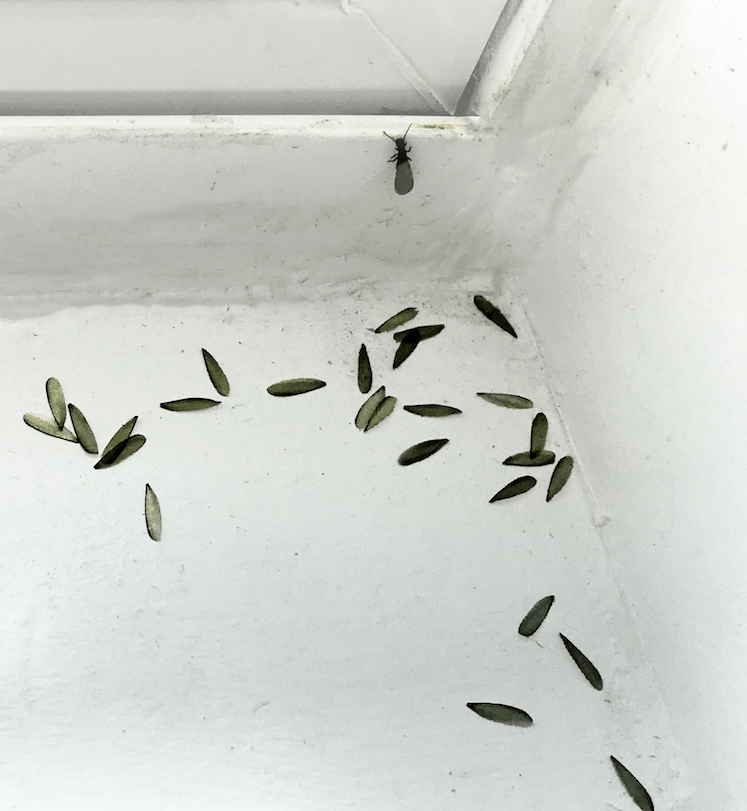
- Evidence: Hollow-sounding wood, blistered paint, mud tubes, discarded wings
- Behavior: Feed 24/7 and cause significant structural damage over time
- Inspection Tip: Check basement walls and exterior slabs for pencil-thick mud shelter tubes
Don’t Let Wood Damage Go Unchecked
Call or text (573) 368-3333 to schedule a wood-destroying insect inspection with Plank Termite & Pest Control.
What to Look For
Signs of Wood-Destroying Insects
You might not see the pests themselves, but they leave clear evidence behind if you know what to look for.
- Piles of sawdust (frass) near wooden structures
- Tapping sounds or faint rustling inside walls
- Small, round exit holes in trim, baseboards, or beams
- Swarming insects inside or around your home in spring
- Discarded wings on windowsills or near doors
- Blistering paint or soft wood under slight pressure
- Mud tubes climbing up foundation walls
Early detection can save you thousands in structural repairs.
Stop Damage Before It Starts
How to Prevent Wood-Destroying Insects in Missouri
Preventing infestations starts with moisture control, routine maintenance, and professional inspections.
- Keep gutters clear and downspouts draining away from the foundation
- Replace water-damaged or rotting wood immediately
- Use pressure-treated or sealed lumber for outdoor projects
- Store firewood off the ground and away from structures
- Seal gaps, cracks, and openings around utility lines
- Schedule annual termite inspections and treatments
Regular monitoring is key to protecting your home’s integrity.
FAQs About Wood-Destroying Insects
What’s the difference between carpenter ants and termites?
Carpenter ants don’t eat wood—they tunnel through it. Termites consume wood and often cause more extensive structural damage.
Are carpenter bees dangerous?
Carpenter bees rarely sting, but their tunneling weakens wood over time. Males are harmless; females only sting when handled.
How do I know if the damage is old or active?
Fresh frass (dust), moisture, or active insects indicate an ongoing problem. Old damage is usually dry and inactive.
What time of year are termites most active?
Subterranean termites swarm in spring, but they feed year-round. Spring and summer are peak detection seasons.
Should I treat just the visible area?
No. Effective treatment targets the nest and surrounding structures. Spot-treating misses hidden colonies or galleries.
Your Home Deserves Expert Protection
Plank Termite & Pest Control offers a 100% Satisfaction Guarantee on all wood-destroying insect services. Trust our team to protect your investment. Call or text (573) 368-3333 today to schedule your termite or carpenter ant inspection.
Judyann Krenning
Very professional and polite. Definitely knew his business. Our problem was taken care of easily.
Katie Steelman
The staff is very responsive to messages. Even though we had to be rescheduled a couple times due to rain, they didn’t just drop us. They took care of us when the weather cooperated. Very good to work with! Price is very reasonable too.
Nicholas Peters
Great service at an excellent price. Technicians are prompt and always discuss options for treatment around the home.
Chris Kallaos
Plank always does a great job for us. They show up when they say they will, and their treatments are effective.
Dorothy Hand
Termite inspection, Termite extermination, Cockroach extermination, General wildlife removal
Jacob did a nice job of taking care of the squirrel nest. No chemicals were needed. Personable young man who was clear about what was needed and helped to remedie the problem.
