
Plank Termite & Pest Control
Pest ID: Spiders
Too Many Legs in Your Living Room?
Spider Identification in Central Missouri
Spiders are predators, and many help control insects. Identification and the location of activity help determine whether management is needed. For concerns inside your home or business, explore our spider pest control service. Read the Missouri Department of Conservation spider guide for background information.
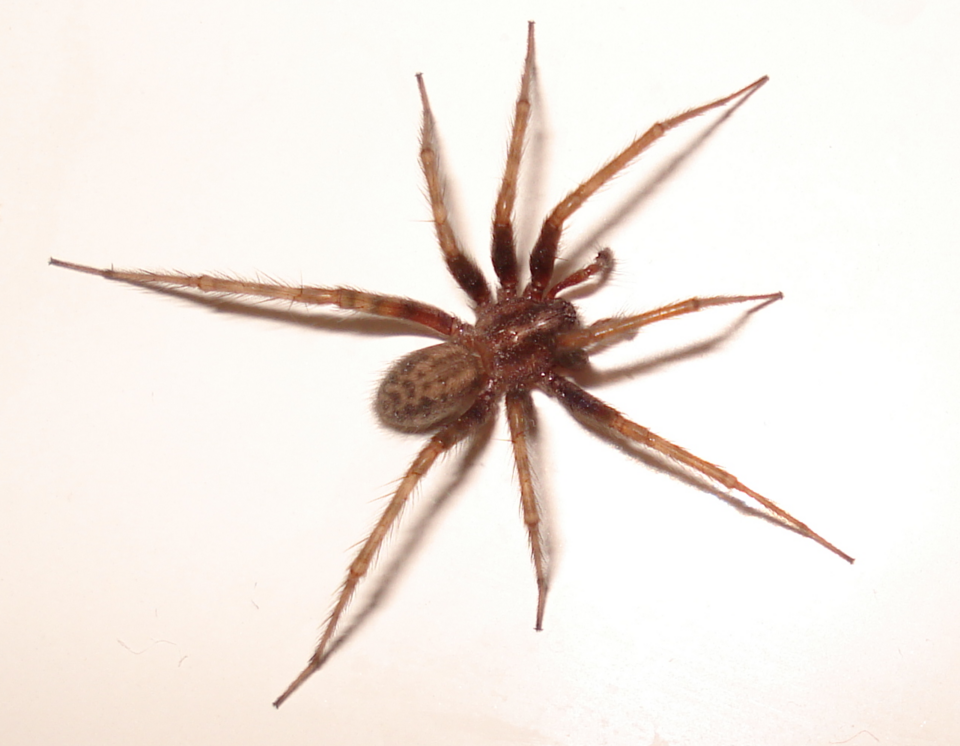
Spider Identification
The groups below provide a starting point for identification. Similar spiders may require closer examination by someone familiar with them. Do not handle a spider to confirm its identity.

Brown Recluse
The brown recluse is a medically significant spider in Missouri. A brown color or violin-like marking alone should not be treated as a confirmed identification.
- Size & Appearance: ¼ to ½ inch body, light brown with a distinctive violin-shaped mark on its back
- Where They’re Found: Common in undisturbed places like attics, closets, cardboard boxes, and inside shoes
- What to Look For: Shed skins, egg sacs, and small webs in dark, cluttered areas
- Risk: Their bites can cause skin damage and require medical treatment
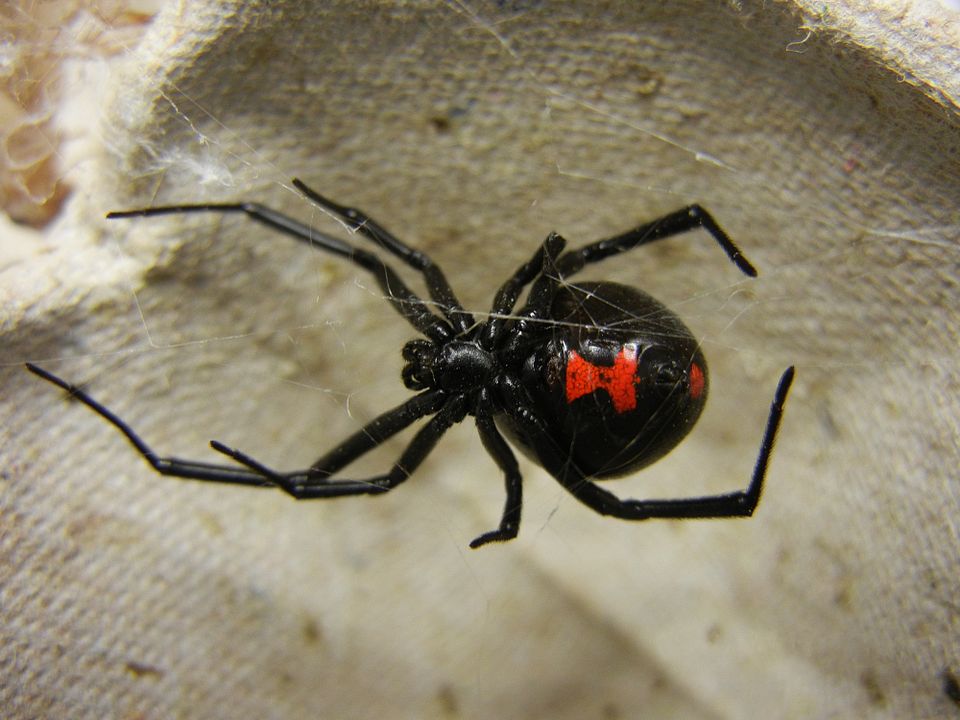
Black Widow
Known for its glossy black body and red hourglass marking, the Black Widow is Missouri’s other medically significant spider.
- Size & Appearance: 1½ inches including leg span, shiny black with a red marking on the underside
- Where They’re Found: Dark, undisturbed corners of garages, crawlspaces, sheds, and beneath outdoor furniture
- What to Look For: Irregular, sticky webs close to ground level; adult sightings at night
- Risk: Venomous bite requiring prompt medical attention
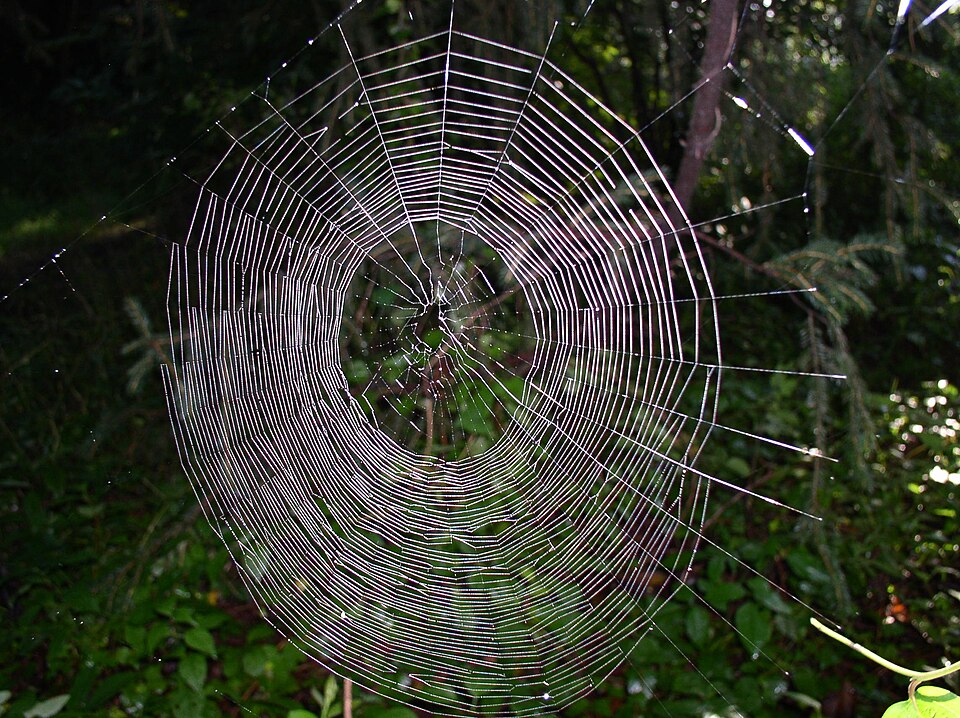
Orb Weavers
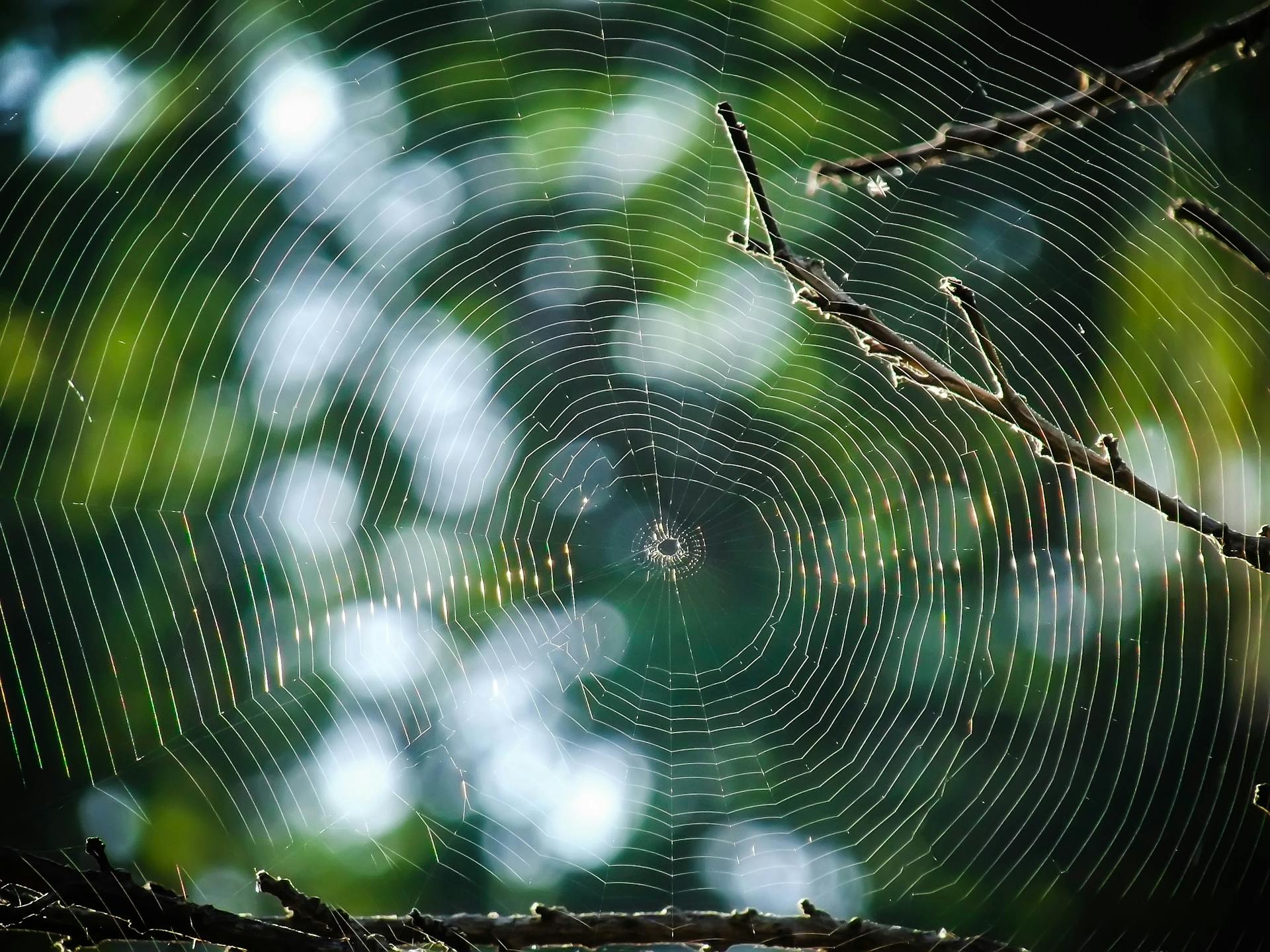
Orb weavers are garden-dwelling spiders that build classic spiral-shaped webs.
- Size & Appearance: Up to 1 inch long, often brightly colored or patterned
- Where They’re Found: Outdoors in shrubs, trees, between fence posts, or under porch lights
- What to Look For: Large circular webs early in the morning; not dangerous but startling in appearance
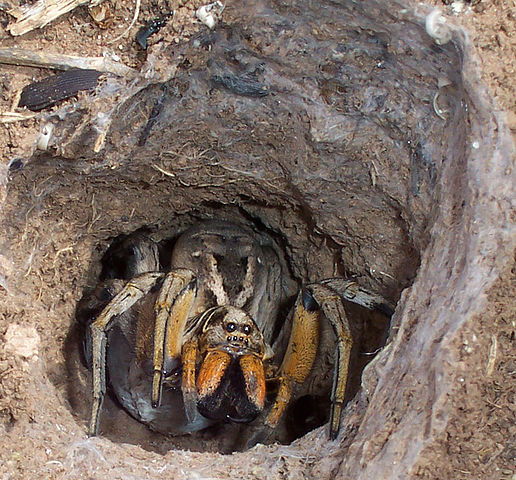
Wolf Spiders
Wolf spiders generally hunt on foot rather than using a web to capture prey.
- Size & Appearance: Large and hairy, usually brown or gray with stripe patterns; up to 1½ inches
- Where They’re Found: Along baseboards, garages, sheds, or under rocks and debris
- What to Look For: Quick sightings at floor level; females sometimes seen carrying an egg sac

Jumping Spiders
Compact and curious, jumping spiders are often spotted on sunny surfaces.
- Size & Appearance: ¼ to ½ inch long, black or brown with iridescent green or blue markings
- Where They’re Found: On walls, windowsills, decks, or patio railings during the day
- What to Look For: Short trails of silk and quick, jerky movement
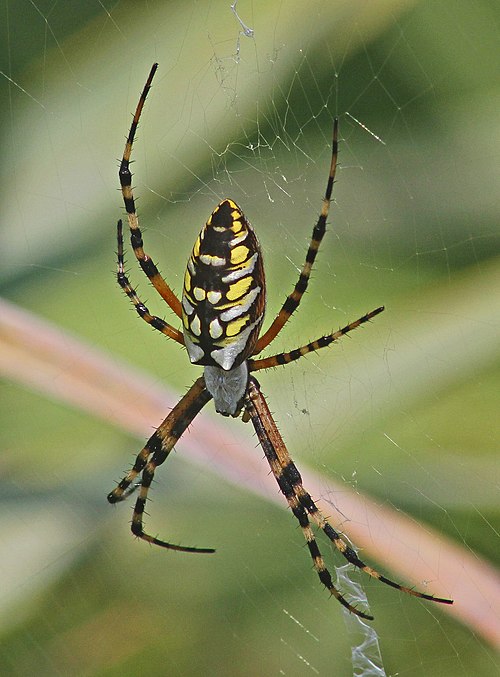
Garden Spiders
Also called Argiope spiders, these are large, striking spiders often found in late summer.
- Size & Appearance: Bold yellow and black coloring with a large round abdomen
- Where They’re Found: Around gardens, flower beds, and bushes
- What to Look For: Tall, vertical orb webs with a zig-zag pattern in the center
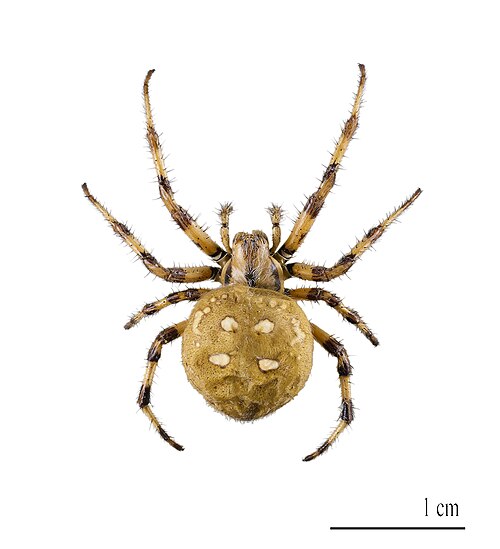
Painted or Spotted Orb Weavers
These colorful spiders help control insect populations in outdoor areas.
- Size & Appearance: Round-bodied with white, orange, or patterned markings
- Where They’re Found: On porch ceilings, fence corners, and outdoor railings
- What to Look For: Decorative webs and adult spiders visible at night around lights
Ready to Reclaim Your Space?
Call or text (573) 368-3333 to discuss spider activity, identification and inspection options for your Central Missouri property.
What to Watch For
Signs of a Spider Infestation
You may not always see spiders, but they leave behind telltale signs that they’ve moved in.
- Webs in corners, basements, closets, or behind furniture
- Egg sacs in window tracks, closets, or ceiling edges
- Sudden sightings of spiders indoors, especially near windows or vents
- Shed skins or molted exoskeletons
- Increased insect activity (spiders follow their food source)
Share where and how often you notice activity. Webs or occasional sightings do not establish the extent of a problem on their own.
Stop Spiders at the Source
How to Prevent Spiders in Homes and Businesses
Spiders usually come indoors in search of food or shelter. You can reduce the risk by making your property less inviting.
- Seal cracks around doors, windows, and utility pipes
- Keep basements, garages, and storage areas clean and clutter-free
- Store items in plastic bins instead of cardboard boxes
- Remove visible webs regularly with a vacuum or broom
- Turn off exterior lights at night to avoid attracting insects (spider prey)
- Schedule regular pest control to reduce insect populations
Spider service may stand alone or be included in a selected Perimeter Guard combination. The scope and visit frequency are agreed for your property.
FAQs About Spiders
Are all spiders dangerous?
Most spiders pose little risk to people. Nearly all use venom to subdue prey, but that does not make them medically dangerous. Brown recluse and black widow spiders merit particular care.
What should I do about a suspected bite?
Seek medical advice for a suspected brown recluse or black widow bite or concerning symptoms. A skin mark alone does not identify a spider.
What can reduce activity indoors?
Reduce clutter, inspect stored items, address gaps and consider the insects that spiders feed on.
Is treatment always needed?
No. Identification, activity and the use of the space guide the response. Discuss practical prevention and any proposed treatment before service.
Discuss Your Service Options
Plank Termite & Pest Control has served Central Missouri since 2000. We discuss the inspection findings, treatment choices, preparation and follow-up before work begins. Contact us to explain the activity you are seeing.
Teresa French
Jacob was fantastic. Super nice. Listened to my babbling and concerns.
T Roberds
Professional service at an affordable price. Highly recommend!
Monica Davis
Josh did an outstanding job the four times he was at my house. I will definitely be recommending plank pest control.
Brian
Awesome service from a very respectable young man will do businesses with them from now on
Anne Chida
Very nice people to deal with. The treatment was odorless and really reduced my unwanted guests. Happy to find their company.